The biggest hosting mistake isn’t bad food. It’s bad timing. I have served genuinely excellent dinners while sweating, apologising, and washing a pan in the middle of someone’s story, and nobody remembers the food from those nights. They remember that I wasn’t really there.
So I split everything across two days. Not because the cooking takes two days, but because the calm does.
Before anything else, I write the list. One long to-do list with every task on it, grouped by day and ordered so I can work straight down it without thinking. That list is the actual secret, not talent, not some timing instinct, just a plan I made when I was calm, so the day of the dinner I only have to follow orders I already gave myself.
The trick underneath it: work backwards from when you want to sit down. Pick the eating time, subtract the rest, subtract the cooking, and that is when things go in. Everything else stacks up the list from there.
2 to 3 days beforeShop and start the sweets
- Do the entire shop in one trip, everything for the whole menu, so you are never running out mid-prep for one forgotten thing
- Make the dessert, most are better on day two
- Put the wine in to chill
- Wash the serving dishes you only use for guests
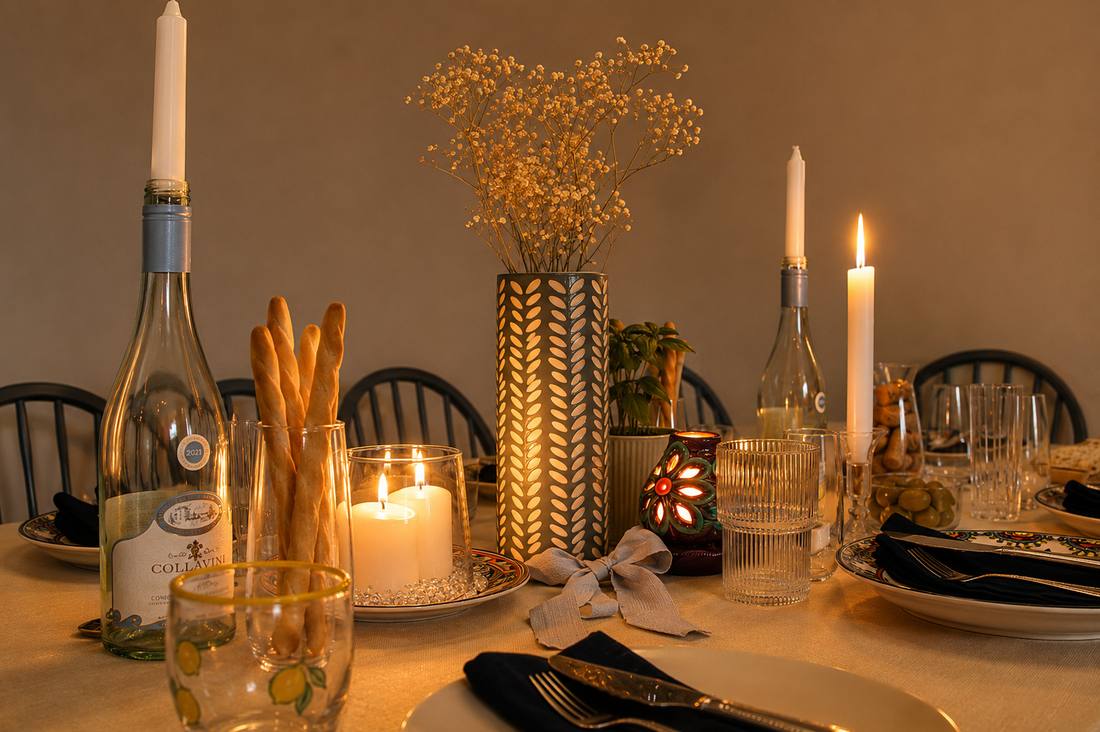
- Set the table if the room allows it
Setting the table two days early sounds absurd until you do it once. It is the single task most likely to get rushed, and the one guests notice first.
The day beforePrep everything that keeps
- Wash and cut the vegetables
- Par-cook anything roasted to about eighty percent, then chill it and finish it hot at the end
- Make the components that only get better overnight: caramelized onions, slow-roasted tomatoes, mushrooms, sauces, dressings
- Batch the cocktail or make the syrups
- Bake the bread
- Salt the roast and leave it uncovered in the fridge overnight, since dry skin is how you get a crust
- Polish the glassware
The morning ofThe pretty jobs
- Arrange the flowers
- Finish and chill the dessert
- Prep the garnishes, herbs in cold water
- Peel the potatoes and hold them submerged in water
- Take the roast out early so it comes to room temperature before it cooks
- Clear and organise the fridge so there is room
An overstuffed fridge is a small disaster waiting for the moment someone hands you a bottle and a platter at the door.
A note on one ovenCook in sequence, not all at once
If everything wants the oven at once, rest is your friend. A big roast can sit tented for up to an hour and only improve, which frees the oven for the vegetables and the bread. Rest the roast, turn the heat up, slot the next thing in. One oven is a sequencing puzzle, not a crisis. And when the clock is tight, know what you can skip: a good roast does not need a sear to be excellent.
Two hours beforeMake the room warm
- Shower, properly, not quickly
- Light the candles now, not when the bell rings
- Turn the oven on
- Music on, low enough to talk over
Thirty minutes beforeStop
- Apron off
- Pour yourself a drink
- Wipe the counters clear
- Taste everything one last time
Your guests should never meet the version of you who is still washing dishes.
That last half hour is the whole point of the two days. It is not padding. It is the part where you stop being staff and become a person at your own table, and every hour you moved earlier was buying you exactly that.